Plan around the destination
We compare the current home, future space, timeline and practical limitations.
DOWNSIZING & ORGANIZING
A thoughtful process for sorting, organizing and deciding what travels forward.
Discuss a downsizing planA CLEARER WAY FORWARD
We compare the current home, future space, timeline and practical limitations.
Photographs and item details allow family members to participate locally or from afar.
Belongings are marked Keep, Family, Sell, Donate, Store, Ship or Dispose.
We organize the transition record, client decisions and surrounding dates while independently selected providers remain responsible for their own work.
The plan separates family distribution, qualifying marketplace or local sale, dealer coordination for vehicles and RVs, donation, storage and responsible removal. Marketplace and specialty services are separately scoped when needed.
MEASURE BEFORE MAKING FINAL DECISIONS
Available destination measurements and selected-item dimensions help turn furniture, artwork and belongings decisions into a usable room-by-room plan.
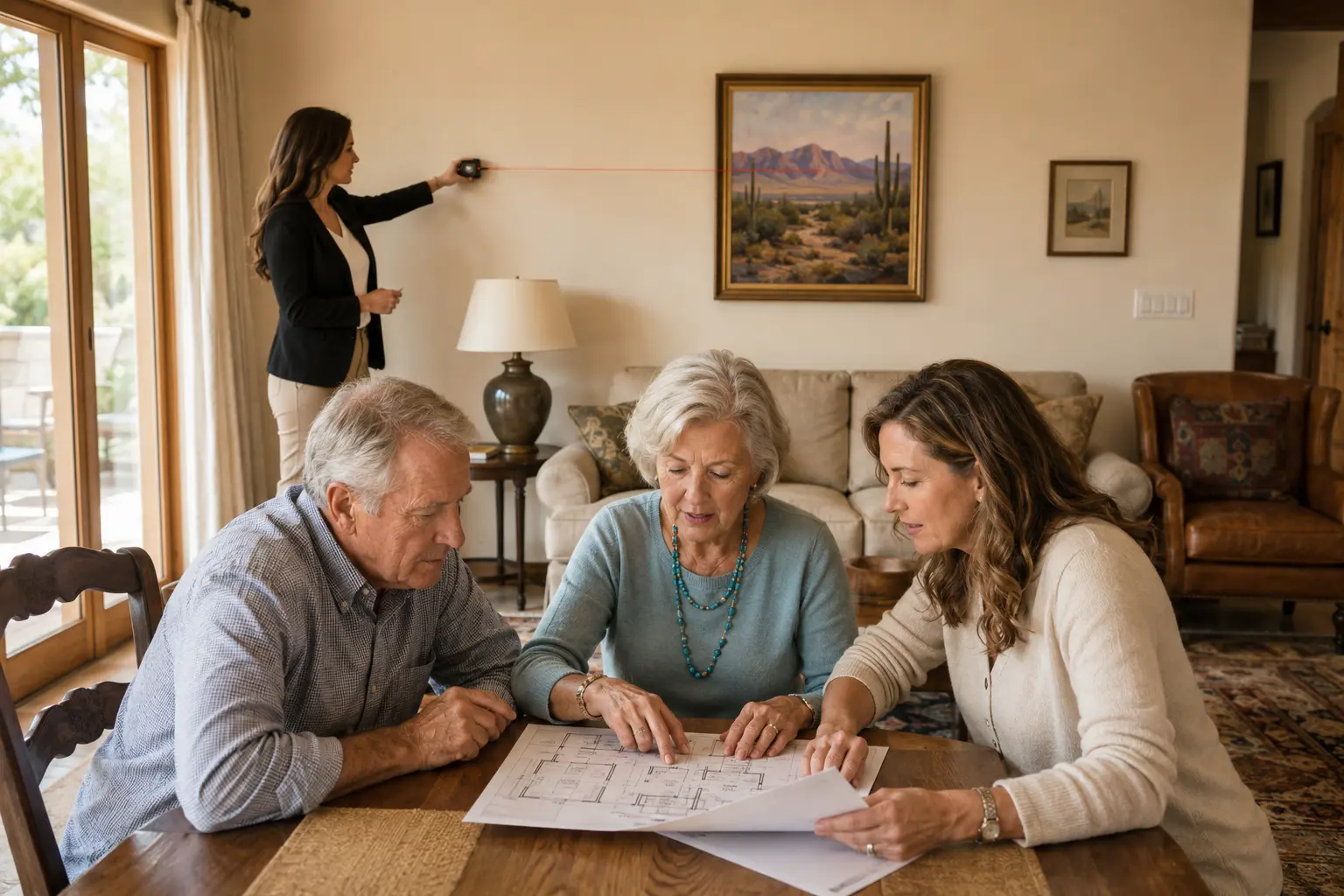
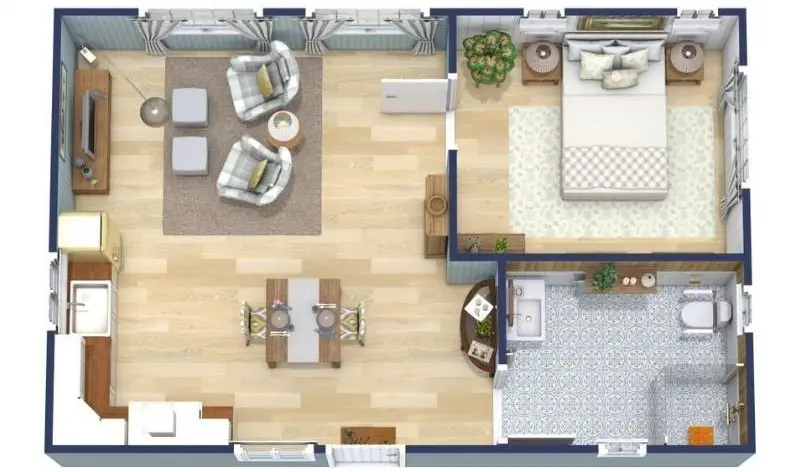
Compare meaningful pieces with the destination before deciding what to keep, move or place on another pathway.
Record room length and width along with usable walls, doorways, hallways, elevators and other access constraints.
Keep available facility plans, measurement-app exports or annotated sketches connected to the destination record.
Mark selected furniture, artwork and belongings as Fits, Does not fit or Needs measuring so the next pathway is clear.
Planning illustration—not architectural, engineering or construction drawings. Critical dimensions may require professional verification.
HOW LONG PATHWAYS CONNECTS THE WORK
DOES THIS SOUND FAMILIAR?
Decisions live in memory, family messages and separate provider schedules. Important items can be overlooked, and the same questions return from room to room.
Your coordinator creates one room-by-room sequence, records each approved pathway and keeps people, appointments and unfinished decisions connected.
THE LONG PATHWAYS VALUE
A consistent person follows the work across family members, dates, decisions and independent services.
Belongings, documents, responsibilities and approved decisions remain connected instead of scattered.
The family can see what is happening, what is waiting and who is responsible for moving it forward.
WHAT YOU RECEIVE
The exact scope follows the Pathway selected, but the household work is made visible through practical, usable records.
FAMILY PORTAL
Authorized family members can review meaningful items, see current decisions and follow progress without repeatedly asking the homeowner to explain what has changed.
See the Family Portal
ILLUSTRATIVE EXAMPLE
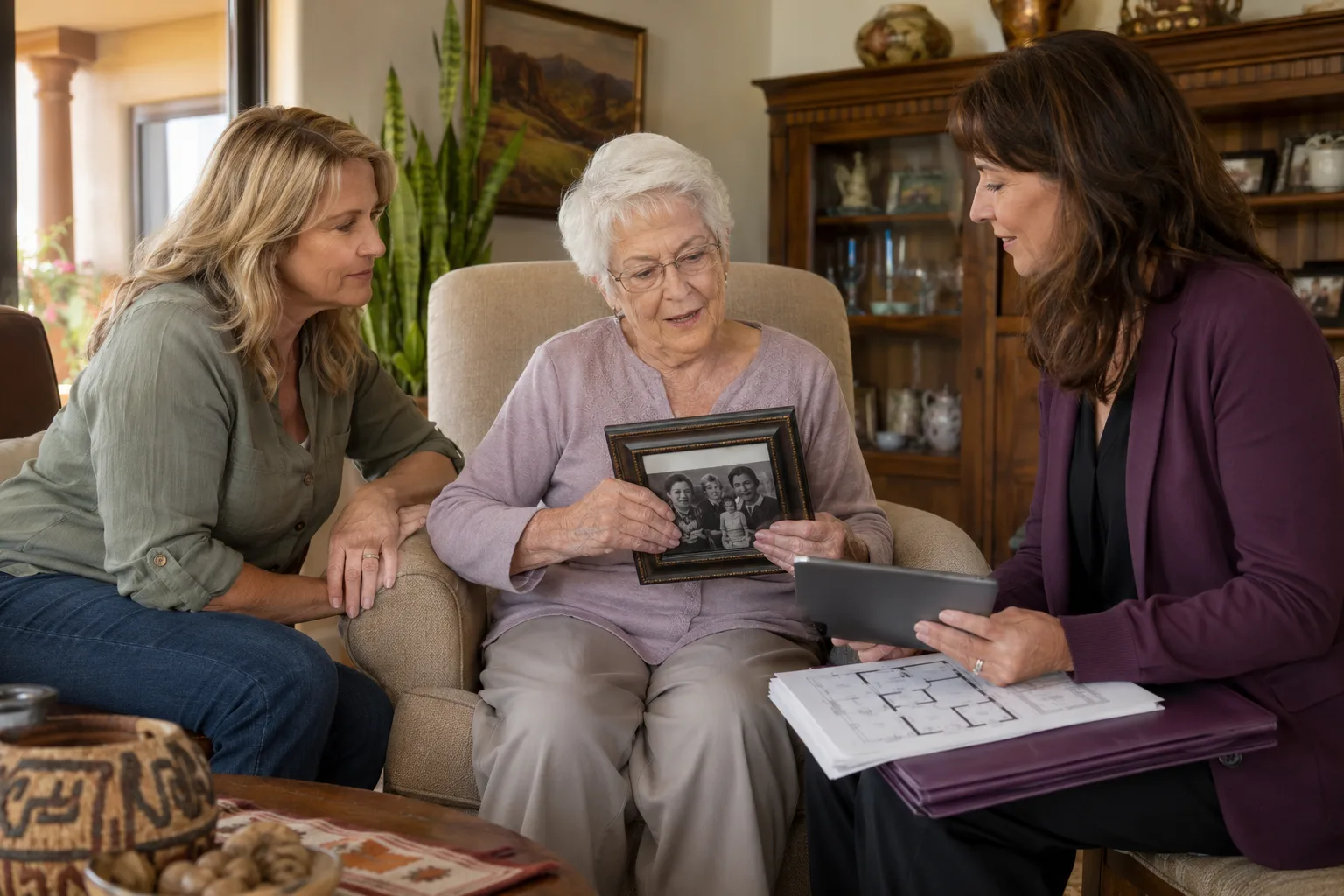
In this illustrative example, an older homeowner preparing for a smaller residence needed to decide what would fit, what family members hoped to receive and which rooms had to be cleared first. Long Pathways organized the work into a paced plan, documented meaningful belongings and connected each approved decision to a responsible person and date.
Illustrative example; details are fictional and show how the process may work.CLEAR ROLES PROTECT THE CLIENT
Long Pathways coordinates: the plan, household record, responsibilities, dates, communication and documentation.
The client decides: what is approved, which independent provider to select and which agreements to sign.
Qualified professionals remain responsible: for legal, tax, medical, appraisal, transportation and other regulated work.
COMMON QUESTIONS
No. The plan identifies what is urgent, what can wait and which decisions need more information.
No. Long Pathways documents and coordinates approved pathways. The client selects and contracts directly with independent providers.
Yes. Authorized participants can receive appropriate visibility through the Family Portal.
WHICH PATHWAY FITS THIS SITUATION?
Receive an immediate preliminary recommendation in approximately 5–7 minutes. No contact information is required to see the result.
HOUSEHOLD COORDINATION
Depending on the selected Pathway and written scope, Long Pathways can help organize utilities, equipment returns, storage, donation, shipping, removal, moving preparation and property readiness.
See household services we can coordinate →TECHNOLOGY IS OPTIONAL
Families may use the Long Pathways app when helpful. Decisions can also be gathered by phone, video or in person and documented by the coordinator as permitted by the selected Pathway.
See how the Family Portal works →YOUR COMPLETE DOWNSIZING OPTIONS
The Pathway determines how much Long Pathways coordination you receive. These related services remain visible so an estate sale, vehicle, collection or household handoff is not overlooked.
These are service levels—not five different situations.
A standalone coordinator-reviewed starting plan.
Complete one focused priority with an organized handoff.
Family-led work with coordinator checkpoints. Extended: $4,495.
Hands-on coordination through completion. Complete Plus: $9,995.
Larger, longer-horizon or multi-location engagements.
YOUR NEXT STEP
Share a few details and a Long Pathways coordinator will help identify the appropriate starting point.